
Nervous System Regulation with Kinesiology in Melbourne
Do you feel constantly on edge, unable to relax, or stuck in a state of exhaustion? Does your body react to stress with a racing heart, shallow breathing or muscle tension? These can be signs that your nervous system is dysregulated – stuck in survival mode instead of a calm, balanced state.
At Essence Kinesiology in Glenroy, Melbourne, kinesiologist Alice Macann supports your body’s natural ability to find equilibrium and resilience. Using gentle, holistic techniques, she helps your nervous system shift from stress and overwhelm towards safety, ease and connection.
If you’re in Melbourne and looking for a body-based, trauma-informed way to support your nervous system, kinesiology offers a gentle and practical path forward.
Understanding Your Nervous System
Your nervous system is the command centre of your body. It influences everything from your heartbeat and breathing to digestion, emotions and sleep. Two main branches work together to keep you safe and functioning:
Sympathetic Nervous System – Fight or Flight
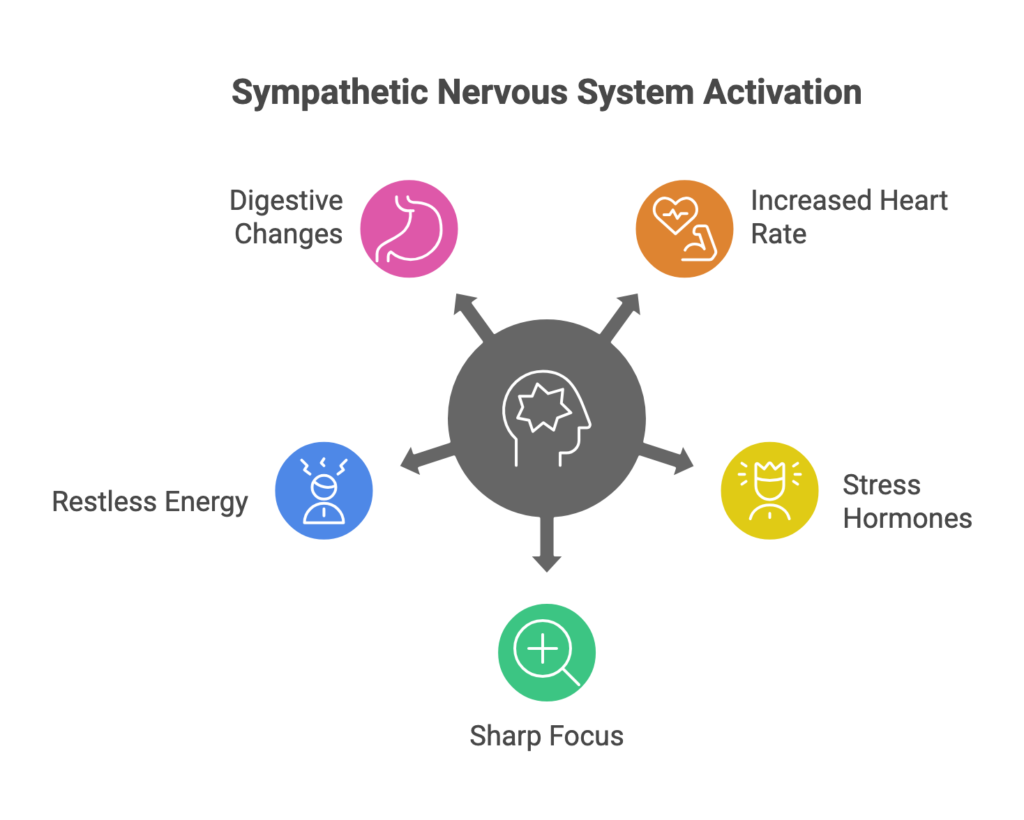
The sympathetic nervous system activates when you sense threat or danger. In short bursts, this response is protective and helpful. When it’s switched on too often, it can leave you feeling constantly on edge.
When this system is highly activated, you might notice:
- Increased heart rate and blood pressure
- Stress hormones like cortisol and adrenaline flooding your system
- Sharp focus on perceived threats
- Restless energy or feeling “keyed up”
- Digestive changes as your body diverts energy away from “non-essential” functions
Parasympathetic Nervous System – Rest, Digest and Heal
The parasympathetic nervous system supports healing, digestion and deep rest. When this system is more active, you’re able to feel calm, connected and grounded.
In this state, your body naturally:
- Slows heart rate and breathing
- Supports digestion, absorption and elimination
- Enhances immune function and repair
- Allows emotional regulation and social connection
- Encourages deep rest and restoration
A healthy, regulated nervous system can move flexibly between these states depending on what’s needed. Chronic stress, trauma or overwhelm can make that flexibility much harder.
What is Nervous System Dysregulation?
Nervous system dysregulation occurs when your body’s stress response becomes stuck in patterns of overactivation or shutdown. Instead of returning to a baseline of safety, you may feel constantly “on” or, at the other extreme, flat and disconnected.
Signs of an Overactive State (Hyperarousal)
- Ongoing anxiety or feeling permanently “on edge”
- Racing thoughts, overthinking or difficulty concentrating
- Trouble falling or staying asleep
- Irritability, frustration or anger outbursts
- Panic attacks or surges of fear
- Feeling jumpy or easily startled
- Difficulty relaxing or sitting still
- Digestive issues like IBS, bloating or reflux
Signs of a Shut-Down State (Hypoarousal)
- Chronic tiredness or exhaustion
- Depression or emotional numbness
- Lack of motivation or interest in life
- Brain fog or feeling spaced out
- Disconnection from your body or emotions
- Withdrawing from social contact
- Feeling frozen, stuck or unable to act
Many people oscillate between these states – swinging from anxious and wired to flat and shut down. This pattern is often linked with long-term stress, anxiety, depression or trauma.
To understand more about how this links with your overall health, you can explore What is Kinesiology?.
How Kinesiology Supports Nervous System Regulation
Kinesiology offers a gentle, body-centred way to work with a dysregulated nervous system. Rather than relying on willpower or trying to “think your way out of it”, sessions focus on your body’s signals, energy systems and deeper stress patterns.
Through muscle monitoring and light touch, Alice works with your nervous system, meridians and subconscious stress responses to help your body remember what ease and safety feel like.
If you’re in Melbourne and feeling stuck in anxiety, burnout, overwhelm or trauma responses, kinesiology can provide a safe, non-invasive way to support change.
What Happens in a Session?
During a session at Essence Kinesiology, Alice may:
- Assess your current nervous system state through muscle testing and observation
- Identify stresses and triggers that keep your system dysregulated
- Support the release of stored tension and trauma in your body and energy field
- Balance meridians, chakras and other energy pathways
- Use gentle techniques such as acupressure, light touch and Total Body Modification (TBM)
- Offer simple tools to help you regulate between sessions
- Create a calm, grounded environment so your system can start to feel safe again
Details about session length and fees are available on the Pricing page, and you can reserve a time through Bookings.
Ready to begin? Book a free discovery call or your first session to explore how this approach can support you.
The Vagus Nerve and Polyvagal Perspective
Recent research – especially Polyvagal Theory – has added depth to how we understand the nervous system, trauma and safety.
The vagus nerve runs from your brain down through your chest and into your abdomen. It plays a key role in:
- Regulating your stress response
- Influencing breathing, heart rate and digestion
- Shaping your sense of safety and connection
- Supporting social engagement and emotional regulation
When this pathway is working well, it’s easier for your body to settle after stress.
Kinesiology can support the vagus nerve and related pathways by helping to:
- Improve your ability to shift from stress into calm
- Release stored survival energy and tension
- Rebuild a felt sense of safety in your body
- Support healthy digestion, breathing and sleep
- Increase capacity for connection and emotional expression
When Nervous System Dysregulation Shows Up in Daily Life
Underlying nervous system patterns can contribute to many common challenges. People often seek kinesiology support in Melbourne for issues such as:
- Ongoing anxiety or panic
- Low mood or depression
- Trauma memories or body responses after trauma
- Burnout, overwhelm and long-term stress
- Difficulty sleeping or frequent waking
- Digestive discomfort or IBS-like symptoms
- Chronic pain, headaches or jaw tension
- Hormonal changes and mood swings
- Trouble managing emotions or feeling easily triggered
- Feeling stuck, shut down or disconnected
If you’re not sure whether this approach is right for you, you can browse the Frequently Asked Questions or reach out via the Contact page.
Your Nervous System Healing Journey
Nervous system healing rarely happens overnight. Your current patterns developed over years and often helped you survive difficult situations. Changing them requires patience, kindness and consistent support.
Some people notice early shifts – such as deeper sleep, less anxiety or more emotional space – within a few sessions. Others notice gradual, layered changes over a longer period as their body builds trust and safety.
Changes Clients Often Notice
People who work with Alice for nervous system support commonly report:
- Feeling calmer and less reactive
- Falling asleep more easily and sleeping more deeply
- Greater ability to stay steady during stress
- More energy during the day
- Less muscle tension, tightness or pain
- Clearer thinking and improved focus
- Better digestion and a more settled gut
- Feeling more “at home” in their body
- Easier, more authentic connection with others
- A stronger sense of resilience and inner stability
Meet Your Kinesiologist – Alice Macann (Melbourne)
Alice Macann is a qualified kinesiologist based in Glenroy, in Melbourne’s north. She offers a calm, grounded space for people who are ready to support their nervous system and emotional wellbeing.
Her background includes:
- Certificate IV in Kinesiology – training in muscle monitoring and energy balancing
- Diploma of Nutrition – understanding how food and nutrient status impact mood and stress
- Diploma of Clinical Rehabilitation & Pilates – in-depth knowledge of movement, posture and how the body holds stress
- Training in Total Body Modification (TBM) – advanced techniques that can support nervous system and organ function
While Alice is trained in Clinical Rehabilitation & Pilates, Essence Kinesiology does not offer Pilates sessions or classes. This knowledge simply informs her understanding of how the body moves and responds to stress.
Alice’s work is:
- Gentle, respectful and client-centred
- Trauma-informed and carefully paced
- Focused on listening to your body, not forcing it
With over 20 five-star reviews, she has supported many people across Melbourne to feel more regulated, resilient and connected to themselves. You can read more about her story on the My Story page.
How Kinesiology Works with the Body and Subconscious
Kinesiology approaches nervous system regulation through several interconnected pathways:
1. Somatic (Body-Based) Release
Stress and trauma responses are often held as tension, posture patterns or numbness. Gentle touch, acupressure and energy work help your body safely let go of what it’s been holding.
2. Energy System Balancing
Your meridians and chakras influence mood, clarity and physical wellbeing. Balancing these systems can support a greater sense of calm, clarity and groundedness.
3. Emotional Processing
Muscle monitoring can highlight emotions that are ready to be acknowledged and released. This process happens at a pace that feels manageable, without needing to relive every detail of past experiences.
4. Unhelpful Belief and Pattern Shifts
Deep beliefs such as “I’m not safe”, “I have to be on guard” or “I’m not allowed to relax” can keep your nervous system in protection mode. Kinesiology can help shift these patterns so your body can experience more ease.
5. Lifestyle and Biochemical Support
Your nervous system is closely linked to sleep quality, blood sugar balance, nutrient status and daily habits. When helpful, Alice may offer simple nutritional or lifestyle suggestions to support the changes happening in your sessions.
Session Length, Pricing and Practical Details
Your Initial Consultation runs for 90 minutes. This extended time allows for:
- A thorough understanding of your history, current symptoms and goals
- Initial assessment of your nervous system and stress patterns
- The beginning of hands-on balancing and nervous system support
- Time to introduce simple practices you can use at home
- A personalised plan for ongoing care if desired
Follow-up appointments are 75 minutes at a discounted rate, providing space for continued regulation, deeper layers of work and integration over time.
You can review all current fees on the Pricing page and book online through Bookings.
Simple Practices to Support Your Nervous System
Kinesiology sessions form the foundation of your work together. Gentle home practices can help you maintain and deepen those changes. Depending on your needs, Alice may suggest:
- Breathing practices to support a calmer, steadier state
- Gentle movement such as walking or stretching to release stored tension (note: Pilates is not offered at Essence Kinesiology)
- Mindfulness or grounding exercises to bring you back into the present moment
- Time in nature to support regulation and perspective
- Connection with trusted people who help you feel safe and understood
- Sleep routines that encourage deeper rest
- Supportive nutrition to stabilise energy and mood
Suggestions are always tailored to your life circumstances and capacity.
Why Choose Kinesiology for Nervous System Support?
Kinesiology may be a good fit if you:
- Feel like your body is stuck in stress, even when life looks “fine”
- Find it hard to relax, switch off or feel truly rested
- Feel flat, numb or disconnected and want to feel more alive
- Have tried talk-based approaches and sense there’s more happening in your body
- Prefer gentle, natural support alongside medical or psychological care
- Want to build long-term resilience, not just short-term coping strategies
Rather than working only with thoughts, kinesiology includes the body, energy and subconscious mind – supporting deeper change.
Building Resilience Over Time
The aim of this work isn’t to avoid every stressful situation. Life will always have challenges. Instead, the focus is on building resilience, so that:
- Stressful events feel more manageable
- You recover more quickly after being triggered
- You spend more time feeling grounded and safe
- Your reactions feel more in your control
- You can connect with others from a more regulated place
- You trust your own signals and boundaries more deeply
With consistent support, your nervous system can learn new patterns, and your sense of who you are in the world can gently shift.
Take the Next Step
You don’t have to keep pushing through anxiety, overwhelm or shutdown alone. Your nervous system is capable of change, especially when it feels supported and safe.
At Essence Kinesiology in Glenroy, Melbourne, Alice Macann offers gentle, personalised sessions to support nervous system regulation and emotional wellbeing.
If you feel ready to begin:
- Explore fees on the Pricing page
- Book your appointment via Bookings
- Or get in touch with questions through the Contact page
Serving Clients Across Melbourne
Essence Kinesiology is located in Glenroy and welcomes clients from across Melbourne, including:
- Glenroy
- Hadfield
- Oak Park
- Pascoe Vale
- Essendon
- Tullamarine
- Other nearby northern and western suburbs
If you live in or around Melbourne and are looking for body-based support for your nervous system, you’re warmly invited to reach out.
Frequently Asked Questions
How long does it usually take to notice changes?
This differs for everyone. Some people notice shifts within two or three sessions. Others experience more gradual change over several months. Your history, current stress load and support systems all play a role.
Can kinesiology help with trauma?
Kinesiology can be a very gentle way to work with trauma stored in the body. Sessions focus on supporting your nervous system at a pace that feels manageable, without forcing you to retell everything that has happened.
For complex trauma, it’s often most helpful to work with both a trauma-informed therapist and a body-based practitioner.
Is this approach safe for everyone?
Kinesiology is non-invasive and usually very gentle. If you’re under psychiatric care or have significant mental health concerns, it’s important to let all your practitioners know who else you’re working with so your care can be coordinated.
Can I see a kinesiologist if I’m already in therapy or taking medication?
Yes. Many clients in Melbourne use kinesiology alongside therapy and medical care. Always speak to your doctor or mental health professional before making any changes to your existing treatment.
For more information, visit the full FAQ – Kinesiology Questions page.
Additional Support Resources
If you need further information or crisis support in Australia:
- Blue Knot Foundation – Trauma Support and Resources
https://blueknot.org.au - Phoenix Australia – Centre for Posttraumatic Mental Health
https://www.phoenixaustralia.org - Lifeline – 24/7 Crisis Support
Phone: 13 11 14
https://www.lifeline.org.au
If you feel ready for gentle, body-based support for your nervous system in Melbourne, you can book an initial consultation with Alice at Essence Kinesiology.